CHAMPIONING NATIVE STUDENTS ACROSS MINNESOTA
Huberty’s new role at MDE focuses on improving educational outcomes and cultural support for Native American youth
By Aabawaagiizhigookwe, Toya Stewart Downey
As a student in Robbinsdale Area Schools it likely never occurred to Annie Huberty that one day she would work in a role that would impact Native American students across the state.
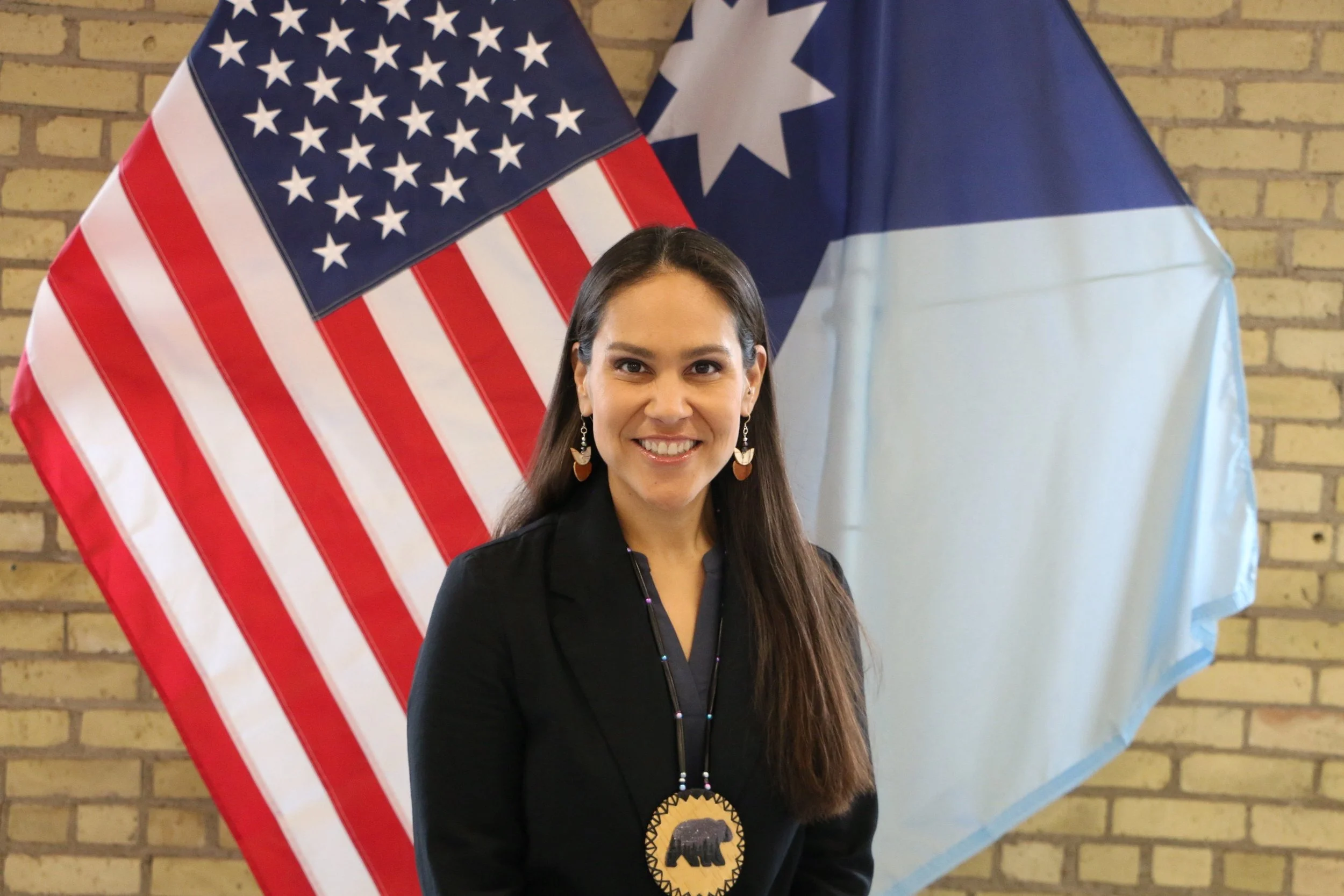
Though the path wasn't direct and she didn't set out to have a career in education, that is exactly what happened. In August, Huberty became the Director of American Indian Education for the Minnesota Department of Education - the agency that is tasked with ensuring every child receives a quality education, no matter their race or zip code.
"To be a part of something so much bigger is what appealed to me about this job," Huberty said.
In her role, she leads a team that works to strengthen and promote positive experiences and educational outcomes for Native American students across the state.
Though it's only been a few months, Huberty said the best part of her job so far has been "being able to connect with some of the other education directors in the state and with members of the Tribal Nations Education Committee (TNEC) and being able to see passion and dedication in the state when it comes to what's happening in American Indian Education programs."
"I've been able to hear and understand the hard conversations that are happening and when I know, and have known, there is a very strong group of people in our systems who will fight for students," said Huberty who is a descendant of the Mille Lacs Band of Ojibwe and an enrolled tribal member with the Red Lake Nation.
Before her move to the Minnesota Department of Education (MDE), Huberty worked for the Hopkins School District for three years and that's where she got her start in education. In Hopkins she oversaw American Indian Education programming across 11 schools, managed state and federal education budgets, and coordinated events that celebrated and supported Indigenous students and families. She also supervised the district's cultural liaisons and co-led the Educators of Color Program, where she focused on mentorship, professional development, and inclusive staff engagement.
Like many others, Huberty found herself at a crossroads because of the COVID pandemic. She had a long career in law enforcement, working for the Robbinsdale Police Department for 17 years, with an understanding that her work was important. Yet, it wasn't enough.
"I thought being a woman, and being a woman of color, would be something that would instill self-belief in other young people because I was being representative of our culture," she said. "I was showing people who we are, where we come from and that we can represent ourselves in society."
"I really enjoyed doing community engagement and doing fun police officer stuff but struggled with constantly having to keep people down," she said. "When you're spending day-after-day meeting people who potentially have had the worst day of their lives ... It was hard. It didn't help me as a person or the people I was trying to serve."
During the pandemic, Huberty was able to stay at home with her two sons and got to see firsthand how they navigated school and how each of them learned as individuals. It was then she realized a career shift was needed.
"It was an eye-opening experience for me and it was then I determined that I wanted to shift into education," she said.
"I could see how moldable the young minds are. They need positive experiences and people to guide them."
She had also reflected on her experience as a student and how the American Indian education team in Robbinsdale had impacted her in such a good way. She is still connected to the advisors who worked with the program when she was a student and is thankful for their work with her and other students.
*With my previous career everything I tried to address or provide remedy for, it was so late in the game there wasn't a lot of opportunity to positively impact the people I was serving."
Leading this work for the state agency gives her the ability to make positive changes and to amplify the importance of having programs to support Native American students.
When asked why programs like American Indian education matters, Huberty was quick to respond.
"For me, as a student: it was a bridge for self-identity," she said. "I grew up in a very traditional family that celebrated our culture and heritage. When I was home on weekends in Mille Lacs, I fit in. In [Robbinsdale schools] I didn't know who I was."
Huberty continued, "It was important to have that support network that understood our lived experiences, which understood we were different from other families and that [the program] was a place to belong and a place to connect within the school district."
She knows that students who grow up in urban areas or areas where they may be isolated from their tribes can feel disconnected from our traditional ways. She also recognizes that there are generations of families who adapted to the "melting pot" philosophy and perhaps didn't have the experience or knowledge of culture ways so lost that connection.
"Indian education can help bring people together in community, it helps people understand basic cultural teaching and people can share backgrounds and culture in a safe and supportive place."
That is one of the goals she strives for as well as to tackle the problem that Native American students will rank as the worst performing in the state when it comes to academics. Those gaps, she said, can be bridged by the school's American Indian Education program and by building supportive cultural environments.
She sees it as her team's responsibility to provide support, share ideas and advise others on how to do the work and do it well. Some districts she said are all in, while others are resistant and don't see the value of the work or don't want to "put Indian students above other students" - even though there are state laws that require programming on behalf of Native American students.
For now, her department is trying to determine some "action-first" steps and providing more training to help efforts of districts around the state.
Huberty is also taking some personal action steps to continue her own growth and that of her family. She is in Mille Lacs every weekend during hunting season and then a few times a month the rest of the year. She joins her family to help teach other relatives the traditional ways including ricing in the summer, fishing throughout the year and sugar bushing in the spring.
"We are living in both worlds and at the same time, trying our best to teach the next generations."
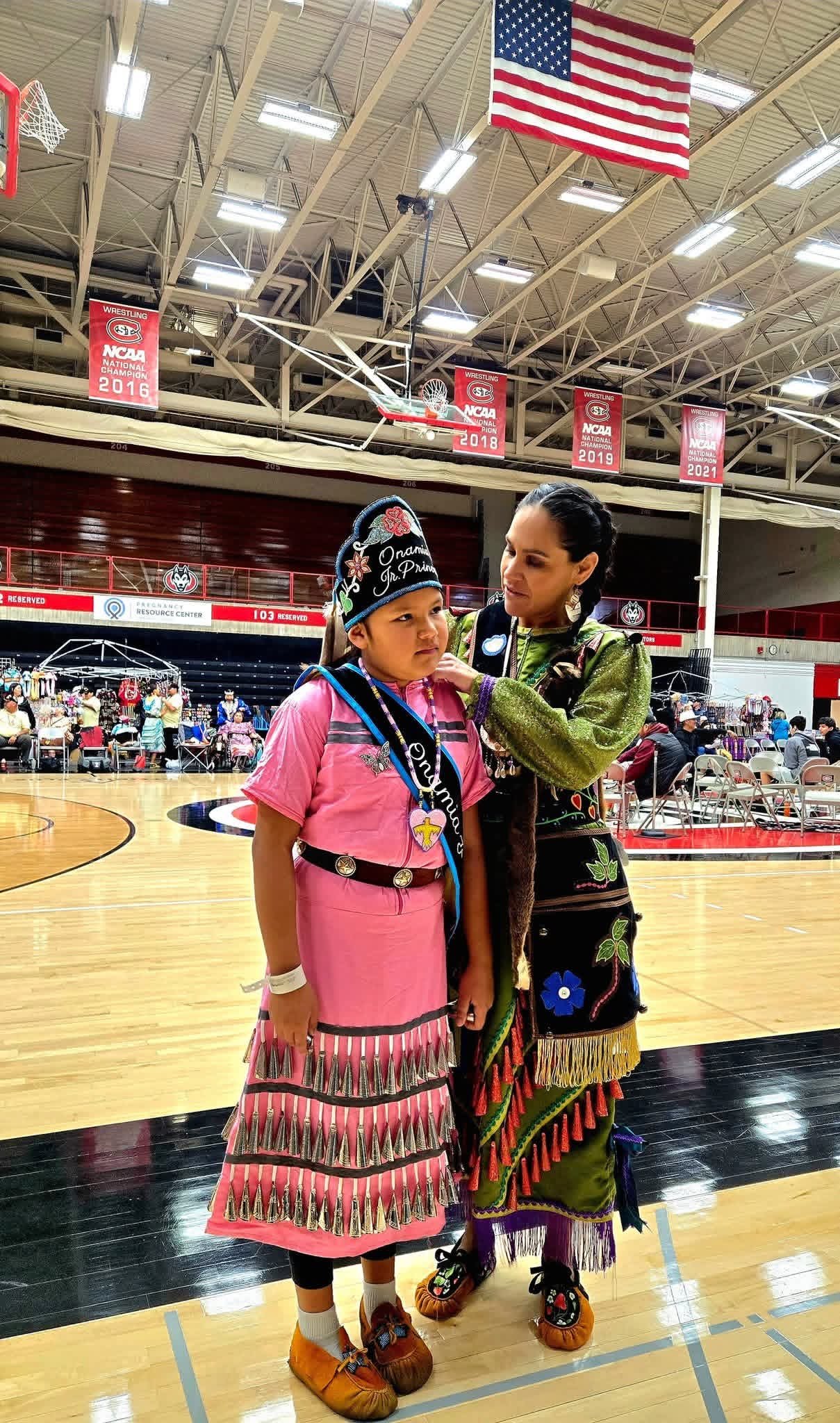
Growing up, Huberty attended powwows and was a fancy dancer, "It was something I did because it is what the family did, but I am not a confident dancer at all."
Eventually she stopped dancing and hadn't danced in de-cades. Not long ago she knew she was missing something and that something was dancing and that she "needed to get back in the circle." She asked Adrienne Benjamin to make her a jingle dress so she could resume dancing.
"She came up with an amazing idea and made me a beautiful dress," she said. "Then, while attending the powwow in Robbinsdale schools, I saw that a lot of young women were looking for an older woman to help guide them through the day. I thought I might not be the most confident or skilled dancer out there but needed to put my own fears aside.
This summer, Huberty, was asked to be the head female dancer for the Mille Lacs Band of Ojibwe's Annual Powwow. This fall, she was the head female dancer at powwow at St. Cloud University and Technical College.
Huberty lives in Brooklyn Park with her two sons. She earned an associate's degree at Normandale Community College, a Bachelor of Science Degree in Police Science from St. Mary's University, a Master of Public Safety Degree at St. Mary's and a Master of Educational Leadership from Concordia College.