
EVERY NUMBER IS SOMEONE'S RELATIVE
October 2, 2026
Behind the staggering rates of violence against Native women are families and communities. Native women continue to experience disproportionately high rates of sexual and domestic violence
By Vivian LaMoore, Inaajimowin Editor
American Indian and Alaska Native women experience domestic violence and sexual violence at disproportionately high rates - numbers that represent mothers, daughters, sisters, aunties, friends and relatives in communities across Indian Country.
According to research funded by the National Institute of Justice, more than four out of five American Indian and Alaska Native women — 84.3 percent — have experienced violence during their lifetimes. More than half, 56.1 percent, have experienced sexual violence, while 55.5 percent have experienced physical violence by an intimate partner.
The same research found nearly half of American Indian and Alaska Native women have experienced stalking and more than one-third experienced some form of violence within the previous year.
Domestic abuse and violence is not just sexual violence and also can be physical, emotional, financial, or psychological.
The causes are complex and extend beyond individual acts. Native advocates and researchers have connected today's high rates of violence to the lasting effects of colonization and the disruption of traditional cultures and community structures. For generations, jurisdictional barriers also limited the ability of Tribal Nations to hold some offenders accountable when crimes occurred on Tribal lands.
Changes to federal law, including reauthorizations of the Violence Against Women Act, have restored some Tribal criminal jurisdiction, but barriers remain.
Access to help can be another challenge. Native survivors may face geographic isolation, limited local services and complicated jurisdictional systems when seeking medical care, advocacy or legal assistance.
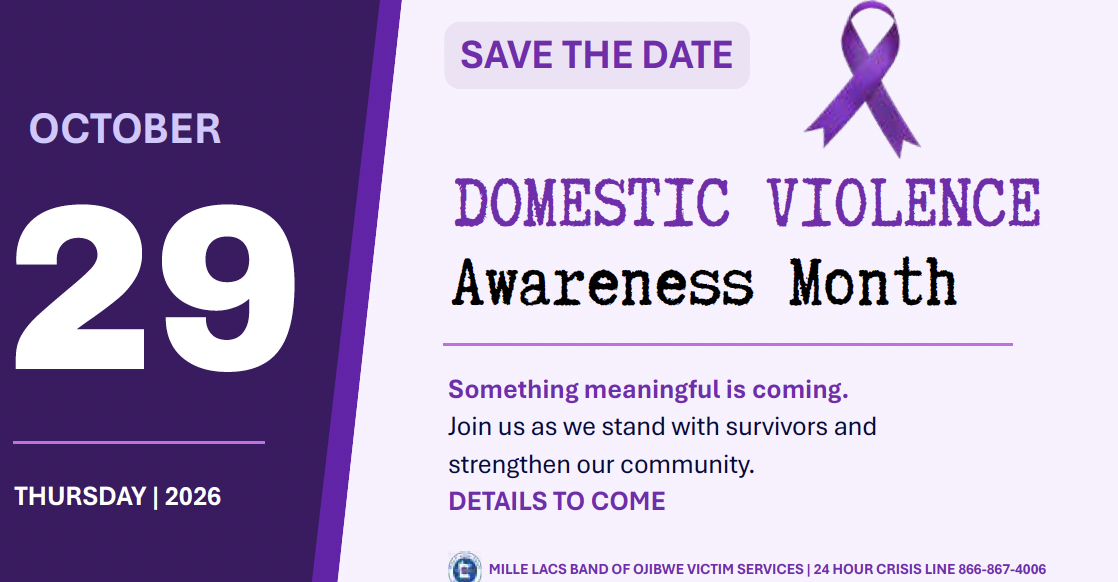
Domestic Violence Awareness Month is an opportunity to bring those realities into the open — but awareness must also be accompanied by action.
That means listening to survivors, believing them, making culturally appropriate services accessible, teaching healthy relationships and consent, holding offenders accountable and continuing to strengthen the ability of Tribal Nations to protect their communities.
It also means reminding survivors that they do not have to face violence and abuse alone.
HELP IS AVAILABLE
Mille Lacs Band Victim Services provides free and confidential support for victims and survivors of domestic violence.
Services include safety planning, crisis support, advocacy, emergency shelter, resources and referrals, and assistance navigating available options.
You are not alone. Support is available, and you decide what next steps are right for you.
Mille Lacs Band Victim Services
Main Office: 320-532-7793
Crisis Line: 866-867-4006
If you or someone you know has experienced sexual or domestic violence, reaching out for help can be a first step toward safety, support and healing.