
HER VOICE CHANGED THE SONG
May 28, 2026
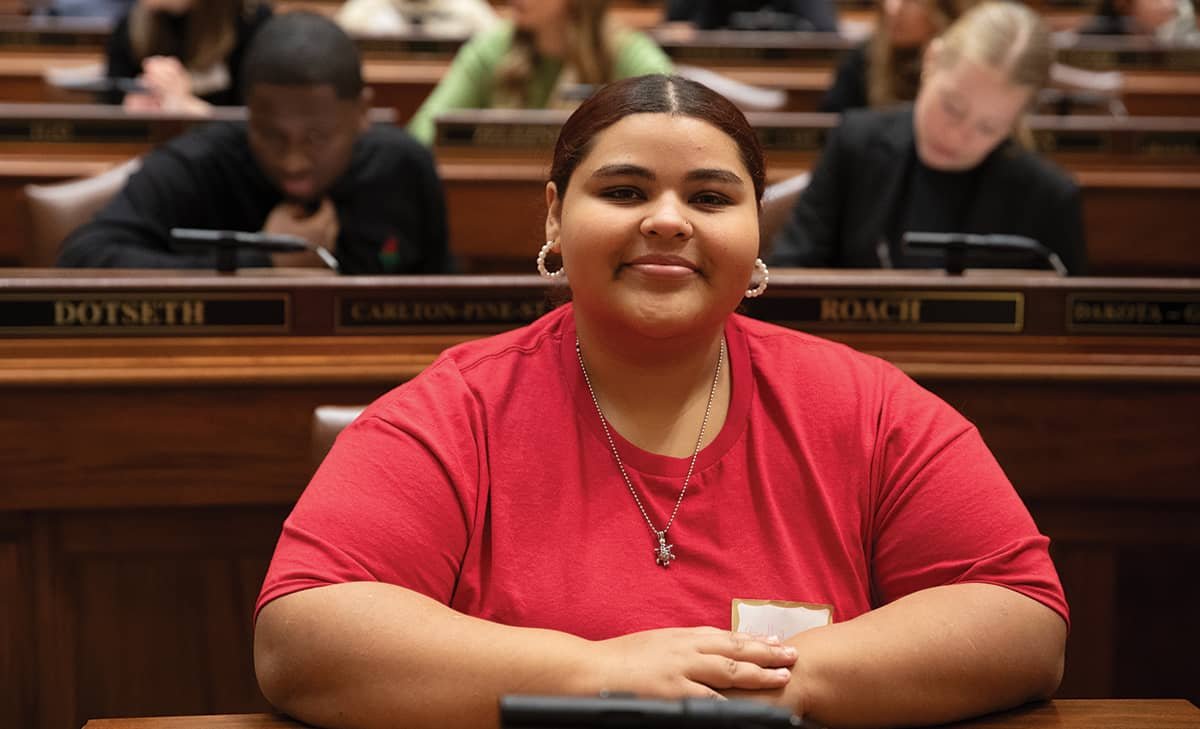
After organizing protests as a sophomore, two years later Isabella Stensrud-Eubanks graduates with lasting change behind her
By Vivian LaMoore, Inaajimowin Editor
As a freshman at Hinckley-Finlayson High School in 2023, Isabella Stensrud-Eubanks found pride and belonging as a backup singer with the Native American Student Association (NASA) drum group.
That spring, the students were invited by school administration to sing a traveling song during the graduation ceremony.
"We sang it and it was a very beautiful thing," Isabella recalled.
But the following year, the school board banned the NASA drum group from participating in the 2024 commencement ceremony.
The decision stunned Native American students and families throughout the community.
Rather than remain silent, Isabella spoke up.
She turned to social media and helped organize students and supporters to attend the next school board meeting in hopes of changing the administration's decision. During the meeting, three students were given five minutes each to explain what the drum and traveling song meant to them.
The room was filled with supporters.
But the students' words hung in the air unanswered as the board voted unanimously to prohibit the drum group from singing at graduation.
Roughly 75 Native American community members attended the meeting. Emotions ran high after the vote. As community members exited the building, law enforcement was called.
"I was hurt and felt discriminated against," Isabella said "Knowing the school was so scared of us that they had to call the police."
Outside the gymnasium, students and supporters gathered in the foyer and sang the traveling song together anyway.
"At the end of the song, everybody immediately dispersed," Isabella said. "It was very emotional. There were a lot of tears and a lot of pain."
The following day, approximately 85 percent of the school's Native American students stayed home in protest.
Isabella did not.
"I wasn't going to let what the school did to us bring me down," she said.
Instead, she organized what became daily silent walkouts. Native American students gathered handmade signs expressing their feelings about the school board's decision. Ten minutes before the final bell each day, students peacefully walked out of class, picked up their signs, and stood silently together in protest.
The demonstrations soon expanded into organized marches around the school and throughout the community.
Support poured in from across the Mille Lacs Band and surrounding communities. The Band's elected officials and community leaders stood alongside the students. Local media outlets began covering the protests as awareness spread far beyond Hinckley.
The demonstrations continued for nearly two weeks leading up to graduation.
Isabella also organized a sidestep social to raise additional awareness and community support.
When the school refused to allow the traveling song during commencement, Isabella worked alongside then-District | Representative Virgil Wind to organize a powwow in the parking lot following the ceremony.
Instead of a Grand Entry, graduates participated in what became known as a "Grad Entry."
"It was very windy and cold that day," Isabella recalled. But the support surrounding the students warmed the atmosphere. Native community members traveled from throughout Minnesota, Wisconsin, North Dakota, and Canada to stand beside them.
The movement eventually reached the Minnesota Legislature.
While attending the Minnesota Association of Alternative Programs (MAAP Stars) at the Empower Learning Center, Isabella traveled to the Capitol with fellow students to advocate for funding that would keep their alternative learning program operating. During that visit, she met a staff member from Sen. Mary Kunesh's office.
At the time, lawmakers were drafting legislation that would strengthen protections for Native American ceremonies in schools.
Isabella was asked to return at a later date to testify before legislators in support of the amendment.
With guidance from Jamie Edwards from Government Affairs, and support from Virgil Wind, Isabella prepared testimony and found the confidence to share her experience publicly.
The day she testified, Sen. Mary Kunesh, Wind, and Edwards stood beside her.
After speaking before lawmakers, Isabella received a round of applause.
The legislation passed.
The protections were formally written into Minnesota Statutes Section 124D.792, ensuring Indigenous cultural practices and heritage are respected during public school milestones across the state. The law expanded existing protections to explicitly include drumming and singing during graduation ceremonies.
The protections were strengthened through legislation passed in both 2023 and 2025.
2023: The legislature passed a law explicitly protecting the right of American Indian students to wear traditional tribal regalia and objects of cultural significance during graduation ceremonies.
2025: The statute was expanded to require that schools accommodate American Indian drumming and other culturally appropriate activities during graduation ceremonies.
"All because I spoke up and made sure we would never be silenced," Isabella said.
She quickly adds that the movement was never hers alone.
"I couldn't have done any of this without the support of the whole community and the people closest to me," she said.
Now, two years later, Isabella is preparing to graduate herself.
This time, there will be a traveling song.
When asked how she expects to feel walking across the stage to receive her diploma, Isabella paused before answering.
"I am going to walk the stage with my ancestors behind me and walk with pride," she said. "I am so very proud of how far we have come in our community and how much our voices truly matter."
And when the traveling song begins, she already knows exactly where she will stand.
"I'm going to stand behind them and background sing," she said, "because that is my right."