More than a flag: Recognition of respectful government-to-government partnership
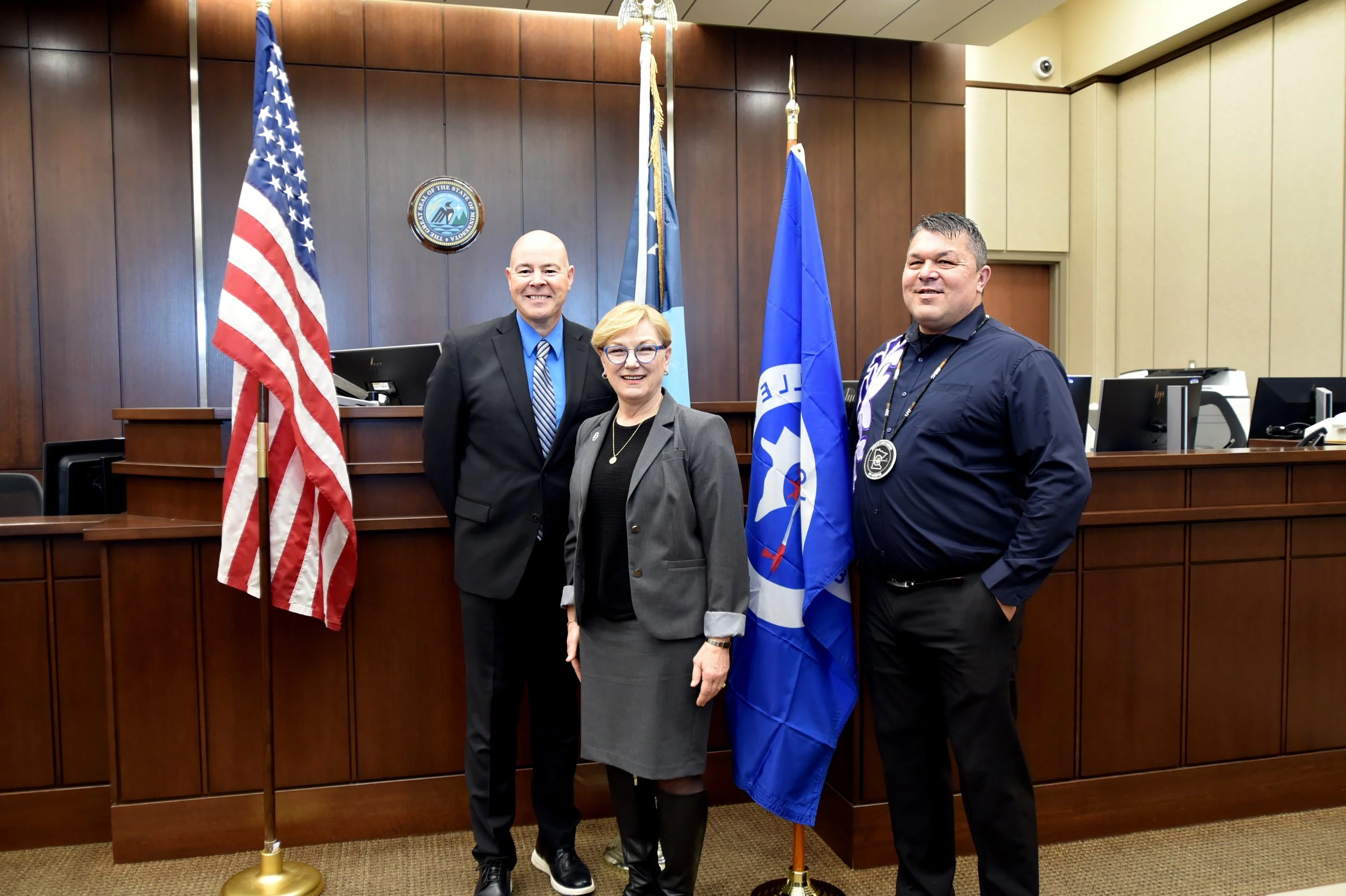
Pine County District Court Judge Stoney Hiljus, Mille Lacs County District Court Judge Gail Kulick, and Mille Lacs Band of Ojibwe Chief Executive Virgil Wind reflect upon the installation of the Mille Lacs Band tribal flag as a shared responsibility of courts and governments to uphold justice, fairness, and respect for all citizens. The ceremony reflects the collaboration between jurisdictions within the shared Minnesota 10th Judicial District.
By Vivian LaMoore, Inaajimowin Editor
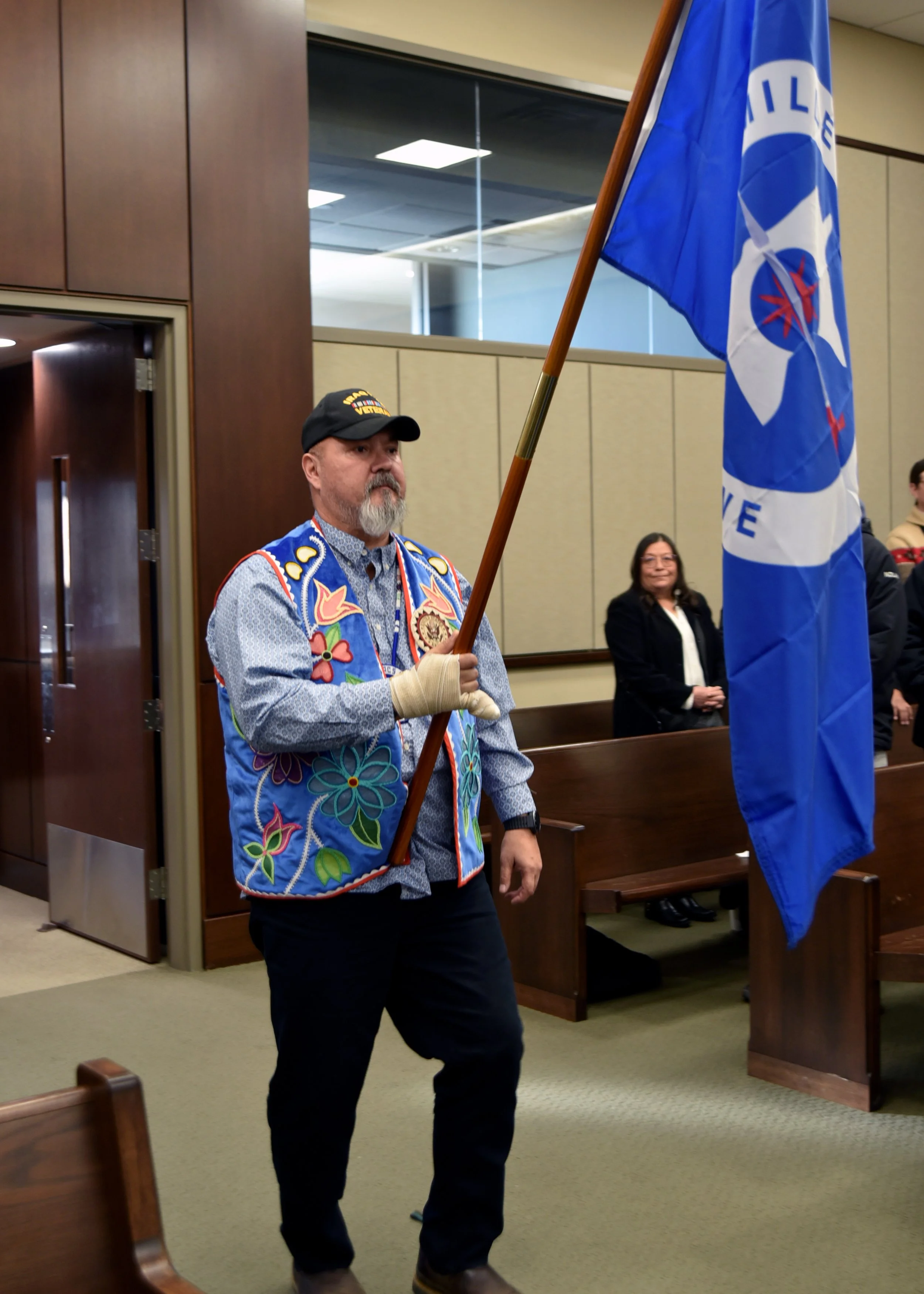
The Pine County Courthouse held a ceremony on January 30 to formally install the Mille Lacs Band of Ojibwe tribal flag in its courtrooms, marking a visible and lasting acknowledgment of tribal sovereignty within the judicial system.
Under the installation, Mille Lacs Band of Ojibwe flags will be displayed alongside the United States and Minnesota state flags in all Pine County courtrooms. The placement reflects a deliberate recognition that tribal nations are sovereign governments whose authority, laws, and people continue to shape the region.
County officials, judicial leaders, Mille Lacs Band representatives, and community members gathered in one of the courtrooms for the ceremony, which included prayer, drum song, and remarks emphasizing the shared responsibility of courts and governments to uphold justice, fairness, and respect.
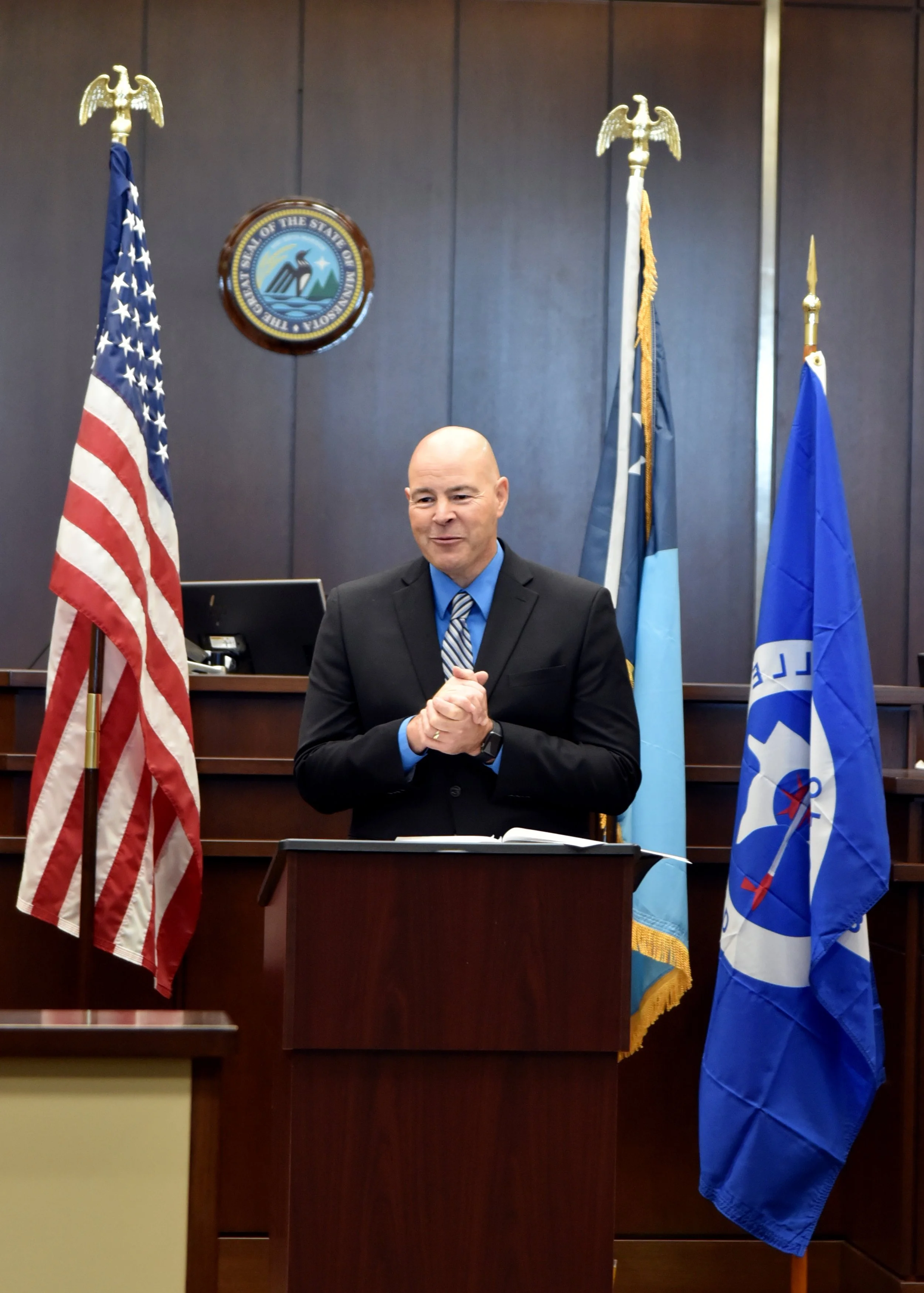
District Court Judge Stoney Hiljus, who presided over the ceremony, said the installation was about more than adding a physical symbol to the courthouse.
"This courthouse stands on land that has long been home to the Mille Lacs Band of Ojibwe, whose presence, governance, and cultural traditions endure today," Hiljus said. "The installation of Mille Lacs Band of Ojibwe flags is a visible and lasting acknowledgment of that legacy."
Hiljus explained that courts are institutions built on the rule of law, due process, fairness, and respect for those who seek justice within their walls. "By displaying tribal flags in our courtrooms, we affirm that these principles are shared," he said. "Our tribal citizens are not merely part of history, but part of active, sovereign governments whose laws, traditions, and people continue to shape our communities, our county, our state, and our nation."
He noted that the justice system relies heavily on symbolism — from Lady Justice and the scales to robes, oaths, and flags - and that those symbols communicate who is seen, recognized, and respected.
"The presence of tribal flags in these spaces sends a clear message," Hiljus said. "That tribal nations and our Mille Lacs Band of Ojibwe citizens are respected partners in the administration of justice, and that Native people entering these courtrooms are seen, honored, and acknowledged."
Also in attendance was Judge Gail Kulick of Mille Lacs County District Court. Though she did not speak, her presence was recognized as a show of support for collaboration between jurisdictions within the shared Minnesota 10th Judicial District.
Hiljus emphasized that the installation reflects longstanding cooperation between Pine County and the Mille Lacs Band, including shared jurisdiction in certain cases and ongoing coordination between state and tribal courts.
"We have resources that go back and forth and collaborate," Hiljus said. "We recognize in the state court system that those who are in court in front of us may also have appearances in tribal court."
Pine County Attorney Reese Frederickson spoke about the importance of relationships built over time, noting that collaboration begins with understanding and respect.
Frederickson reflected on the value of getting to know the Mille Lacs Band not only as a government, but as a community, emphasizing that meaningful partnership requires listening, learning, and recognizing shared responsibility. He described the ceremony as an opportunity to acknowledge more than the installation of a flag — but to recognize mutual respect, shared humanity, and a commitment to a better path forward.
Frederickson emphasized that the courthouse is a place where people often arrive during difficult moments in their lives, and that symbols of respect and inclusion matter in those spaces. He said the relationship between Pine County and the Mille Lacs Band demonstrates what is possible when governments work together in good faith for the benefit of the people they serve.
Several judicial leaders who were unable to attend in person submitted letters that were read during the ceremony, reinforcing the broader significance of the moment.
Minnesota Supreme Court Associate Justice Anne Mckeig wrote that the installation represents "a moment of deep meaning and long-overdue recognition."
"These flags are living symbols of identity, sovereignty, endurance, and cultural pride," McKeig wrote. "Justice cannot be fully served if the identity, history, and sovereignty of Native peoples are invisible within the very institutions meant to protect all citizens."
Chief Judge Elizabeth Strand of the Tenth Judicial District echoed that sentiment, calling the installation "both meaningful and long overdue."
"The presence of tribal flags within our courtrooms recognizes the enduring culture, sovereign government, and judicial system of the Mille Lacs Band whose history predates the State of Minnesota," Strand wrote.
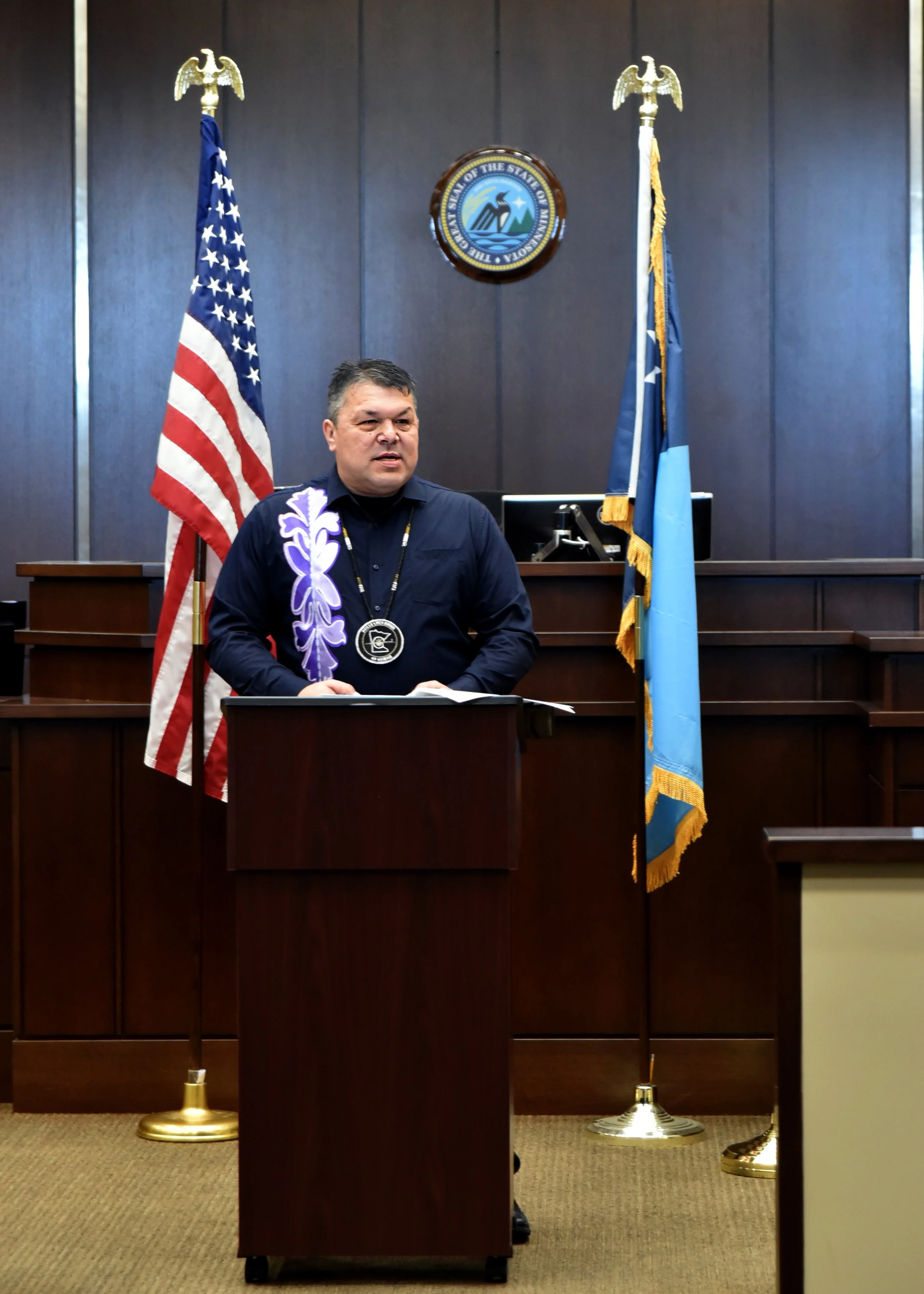
Mille Lacs Band Chief Executive Virgil Wind said the ceremony reflects years of relationship-building grounded in good faith.
"Our statement of principles with Pine County was established in 2012," Wind said. "It reflects what is possible when governments come together in good faith, recognizing one another, respecting sovereignty, and working collaboratively for the benefit of the people we serve."
Wind said that for Band citizens, seeing their flag in a courthouse can carry deep meaning.
"For our citizens, seeing our flag in a space that can often feel intimidating or unfamiliar affirms identity, dignity, and belonging," he said. "It tells our people they are seen, their heritage is respected, and their voices are heard."
Hiljus closed his remarks by noting that the flags will serve as daily reminders — to judges, attorneys, court staff, and the public — that justice does not exist in isolation, but within a broader community shaped by many histories and voices.
"Justice is strongest when it is inclusive and grounded in mutual respect," he said.
The Mille Lacs Band of Ojibwe flags will now remain permanently displayed in Pine County's courtrooms, standing as symbols of sovereignty, collaboration, and a shared commitment to justice.