
October 29, 2026
Decision leaves federal and Minnesota protections for Native children and families intact.
By Vivian LaMoore, Inaajimowin Editor
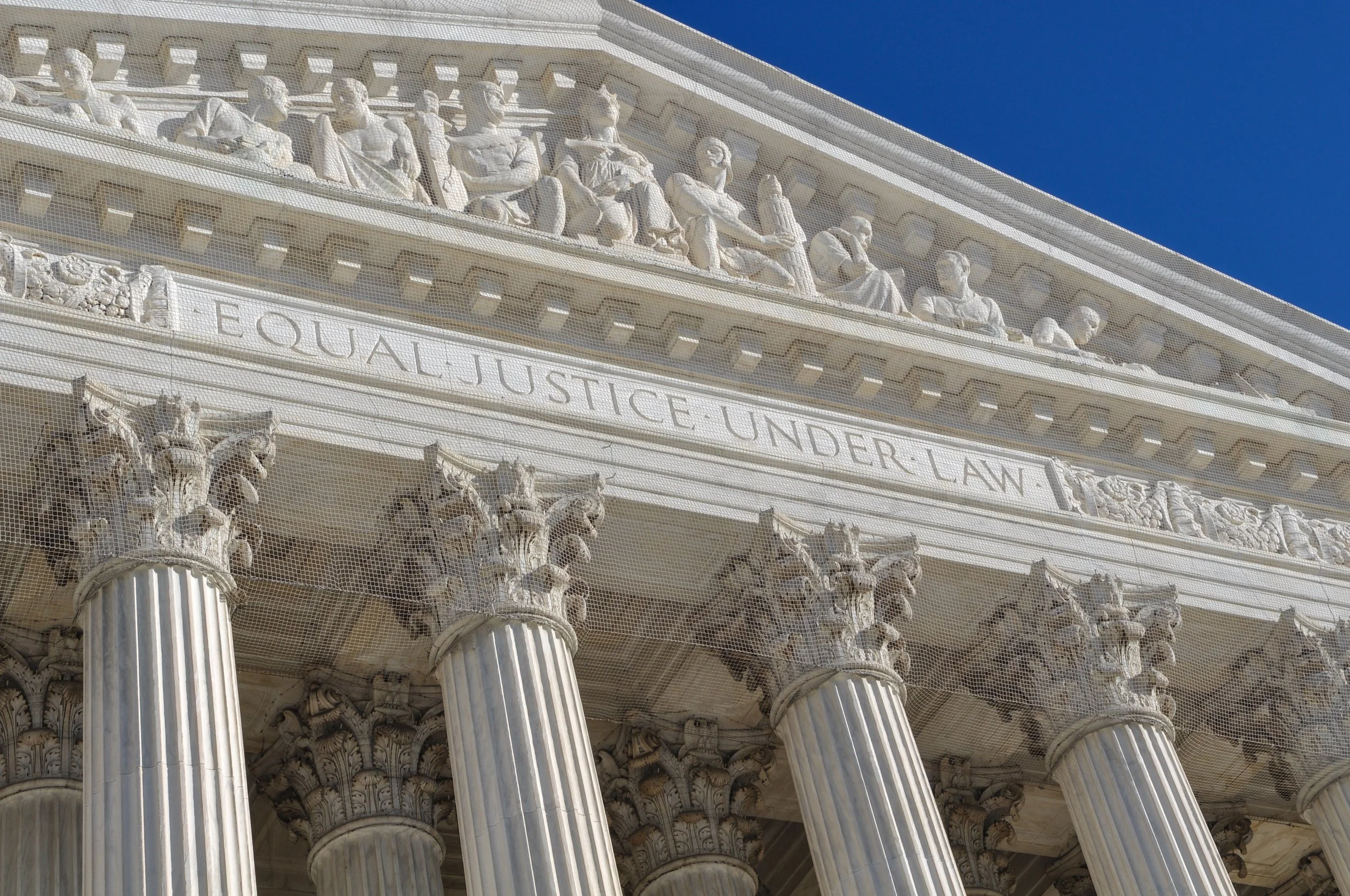
The U.S. Supreme Court declined Oct. 5 to hear a Minnesota case challenging the Indian Child Welfare Act (ICWA) and the Minnesota Indian Family Preservation Act (MIFPA), leaving both laws in place and providing another victory for tribal nations seeking to protect Native children and families.
The decision in N.R. v. Ellison, involving twin children from the Red Lake Nation, ends the latest attempt to bring a constitutional challenge to the laws before the nation's highest court.
For Mille Lacs Band Solicitor General Anita Fineday, who has spent decades working in Indian child welfare law, the decision brought a sense of relief - but not an expectation that the legal challenges are over.
"We were holding our breath," Fineday said. "We were hoping they would not take the case."
Fineday said the possibility of another Supreme Court review was particularly concerning given the Court's willingness to overturn longstanding legal precedents.
"My fear was ICWA would be another one," she said.
The Supreme Court previously upheld key provisions of ICWA in its 2023 decision in Haaland v. Brackeen, rejecting several constitutional challenges in a 7-2 ruling. The Court's latest decision leaves the existing legal protections intact without issuing a new ruling on their constitutionality.
A FIGHT OVER THE FUTURE OF NATIVE CHILDREN
The Minnesota case involved twin children enrolled in the Red Lake Nation who had been placed in foster care with a non-Native couple. When plans were made to place the children with Indigenous relatives, the former foster parents challenged the placement and argued that ICWA and MIFPA violated constitutional equal protection guarantees.
The children's biological mother, the county, the guardian ad litem and the Red Lake Nation supported placement with relatives.
Minnesota courts rejected the foster parents' attempt to intervene in the case. The Minnesota Supreme Court declined to consider their constitutional arguments because they lacked standing to bring the challenge.
The former foster parents appealed to the U.S. Supreme Court, which declined to hear the case.
ICWA was enacted by Congress in 1978 in response to the widespread removal of Native American children from their families and communities. The law establishes federal standards for child welfare proceedings involving Native children, including requirements intended to preserve family connections and tribal relationships.
MIFPA, first enacted in Minnesota in 1985 and strengthened over the years, provides additional state protections. Significant amendments adopted in 2023 incorporated important federal ICWA provisions into state law, strengthening protections for Native children even in the event of future challenges to federal law.
A FAMILIAR LEGAL BATTLE
For Fineday, the circumstances surrounding the Red Lake case brought back memories of one of her earliest experiences as a tribal attorney.
In 1994, while working for the Leech Lake Band of Ojibwe, she represented the tribe in a case involving three young girls who had spent an extended period in a non-Native foster home. The children's grandmother wanted to adopt them but needed time to address health concerns before she could care for them.
The case eventually reached the Minnesota Supreme Court, where Fineday and the tribe prevailed.
"I was just a very new attorney at the time, and that was my first and only case to take to the Minnesota Supreme Court," she recalled.
More than three decades later, Fineday continues to see similar disputes involving the rights of Native children, their families and tribal nations.
She believes the repeated legal challenges are part of a broader effort to weaken or overturn ICWA, pointing to the involvement of national legal advocacy organizations that have supported litigation challenging Indian child welfare protections.
"Honestly, they are going to keep coming. The cases will not stop. But we will keep fighting," Fineday said.
WHAT THE LAWS MEAN FOR MILLE LACS BAND FAMILIES
While Supreme Court decisions draw national attention, Fineday said the everyday application of ICWA and MIFPA takes place in county child protection offices, courtrooms and the work of tribal child welfare programs.
Both laws establish protections intended to prevent unnecessary separation of Native children from their families and communities. They also require child welfare agencies to take additional steps to help families address the circumstances that led to a child's removal.
Those requirements can mean allowing parents and relatives more time to complete services and demonstrate that they can safely care for their children.
Fineday acknowledged that this can sometimes extend the time children spend in foster care, but emphasized that preserving family relationships and providing opportunities for reunification are central purposes of the law.
She pointed to Hennepin County's specialized ICWA unit as an example of efforts to maintain family and cultural connections while children are in foster care.
Even when a Native child must temporarily live with a non-Native foster family, Fineday said it is important that the child remain connected to relatives, tribal communities and cultural traditions.
One continuing challenge is the shortage of Native foster homes. Fineday said Native children remain disproportionately represented in foster care, reflecting the continuing effects of poverty, historical trauma and discrimination.
Although she has seen some improvement in child welfare practices, she believes substantial work remains.
STRENGTHENING PROTECTIONS IN MINNESOTA
Fineday has worked in Indian child welfare from nearly every perspective — as a tribal attorney, tribal judge, trainer and national child welfare advocate.
An enrolled White Earth Nation member, she served as a tribal judge for approximately 20 years and previously directed Indian child welfare work for Casey Family Programs, a national organization focused on reducing the need for foster care.
She also helped train tribal, state and county professionals through Minnesota's Children's Justice Initiative and participated in efforts to strengthen MIFPA, including work to improve the transfer of child welfare cases from state courts to tribal courts.
Fineday described Minnesota's Indian Family Preservation Act as one of the strongest state child protection laws in the country. She credited state Sen. Mary Kunesh as a leading advocate for strengthening those protections.
The 2023 amendments reinforced requirements for child welfare agencies, including efforts to keep Native children connected to their families and tribal communities.
According to Mille Lacs Band attorney James Ryan, who worked alongside former Band attorney Angel Daher on the legislation, the Band and other Minnesota tribes worked to ensure that protections for Native children would remain in place even if the U.S. Supreme Court overturned ICWA.
"There are two independent layers of protection, state and federal, so that if one falls, the other still stands," Ryan said.
Ryan said he and Daher also led efforts to include a provision recognizing that tribal nations define their jurisdiction in child protection matters. "For the Mille Lacs Band, the provision strengthens the Band's ability to exercise its sovereignty in matters involving its children and families."
Fineday also pointed to the financial responsibilities counties face when Native children are placed in foster care, particularly when additional time is needed to reunite families.
Minnesota provides funding to help offset those expenses through a program called Out-of-Home Placement Reimbursement Aid. Established in 2017, the program distributes state funding to eligible counties and tribes for a portion of the costs associated with placing Native children outside their homes.
The program receives $5 million annually in state funding. Counties receive a proportional share of available funding based on their qualifying placement costs, and their eligibility is tied to compliance with ICWA and MIFPA. Counties that remain substantially out of compliance can have their aid reduced
The reimbursement program recognizes the financial responsibilities associated with child protection while encouraging counties to meet their legal obligations to Native children and families.
For Fineday, however, passing strong laws and providing financial assistance are only part of the work. Ensuring that counties understand and follow those laws is equally important.
"Where the rubber meets the road is in the counties," she said.
She emphasized that the Mille Lacs Band has consistently participated in government-to-government discussions and advocated for the protection of Native children.
A HISTORY THAT REMAINS PERSONAL
For Fineday, the importance of keeping Native children connected to their families is rooted not only in her professional experience but also in her own family's history.
Her mother was just 4 years old when she was taken from her family and sent to a boarding school in South Dakota where she attended that school for three years.
The effects of that separation, Fineday said, continue to be felt across generations, not only for her family, but for countless Native American families across the continent.
It is part of the history ICWA was enacted to address — a history in which Native children were routinely removed from their families, communities, languages and cultures.
Protecting Native families today is also about addressing the lasting harm caused by those practices.
Although the Supreme Court's decision in October brought relief to tribal nations, Fineday recognizes that the work of protecting Native children and strengthening families is far from finished.
For the Mille Lacs Band, she said, advocating for children has always been a fundamental responsibility.
"Mille Lacs has always understood the importance of government-to-government meetings and stressing the importance of our children," Fineday said.
*We have to continue to say that and continue to stress how important that is and make sure our children have everything they need to be successful."