Building the Future: Community Development Advances housing, infrastructure, And Workforce Training

By Vivian LaMoore, Inaajimowin Editor
From housing renovations and infrastructure improvements to new workforce training initiatives, the Mille Lacs Band of Ojibwe Community Development Department - overseen by Commissioner Tracy Burr — is advancing a number of projects aimed at strengthening communities across the Reservation while building long-term capacity within the Band government.
The Community Development Department provides development and improvement services that promote safety, security, and cultural sensitivity while building stronger communities. The department is responsible for housing construction and maintenance, roads, and critical infrastructure such as water and sewer systems.
One of the departments most visible accomplishments in recent years has been the effort to restore housing units and return them to the Bands housing stock. Over the past year, more than 50 homes have been remodeled and returned to the Band's housing stock. In fiscal year 2025 alone, Community Development crews addressed 2,780 housing and maintenance work orders. Since September, another 500 work orders have been added.
"Our crews are extremely busy," Burr said, noting that the department employs nearly 80 staff members, including office personnel.
Also coming soon from the housing department is the Band's own real estate guide, designed to help Band members buy or sell homes within the Reservation. The concept is to create a "one-stop shop" where Band members can view homes for sale by other Band members online and find the information and forms needed to begin the process. More details about the new resource will be shared as the initiative develops.
Even with the heavy workload, Community Development is looking ahead with a strategic plan focused on both cost savings and workforce development.
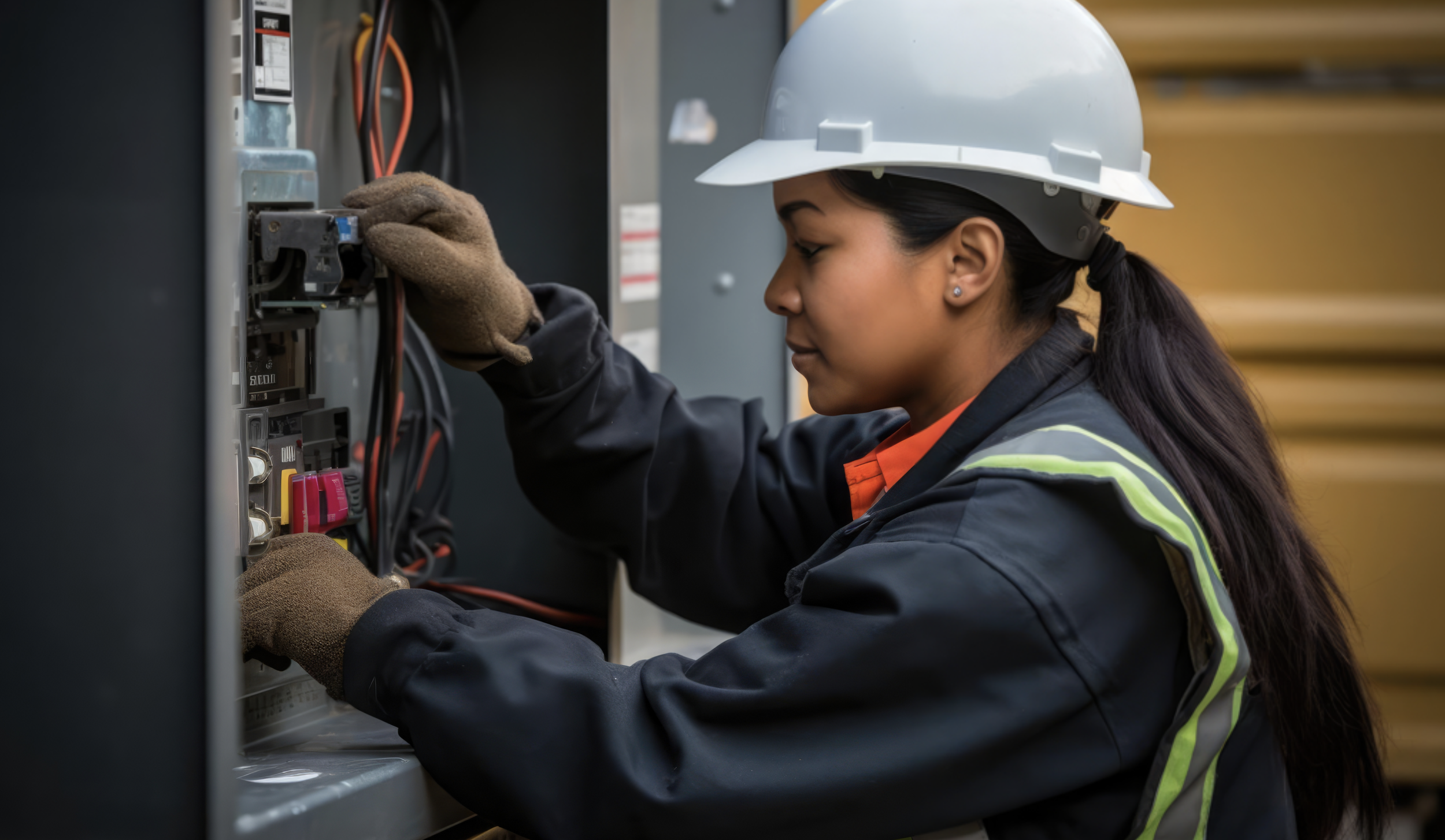
One of the department's major initiatives is the creation of an in-house electrical division. The plan calls for hiring a master electrician to lead the division, working alongside a journeyman electrician who is already on staff but not currently serving in that capacity, along with three apprentices.
The goal is to significantly reduce the Band's reliance on outside contractors while developing skilled trades within the community.
"We're putting the numbers together to show where we can save the Band a great deal of money just in electrical repairs," Burr said. "We're looking at 50 to 60 percent savings Band-wide."
The potential savings are already clear. For example, the Band plans to replace lighting fixtures in the Government Center with energy-efficient LED lighting. Contractor bids for the project are estimated at roughly $200,000. After reviewing the plans, the proposed master electrician estimated the work could be completed in-house for about $100,000.
In addition to cutting the project cost in half, LED lighting would significantly reduce long-term energy use and operating costs.
Another major project underway is the remodeling of the Assisted Living Unit in East Lake. The electrical portion of that project alone is estimated to cost about $500,000 if completed by an outside contractor. Burr estimates the work could be completed by an in-house electrical crew for closer to $250,000. To support the development of the new division, Community Development has drafted job descriptions for electrical apprentices. The positions are currently moving through the Band's Administrative Procedures Board process.
The apprenticeship program is designed to combine classroom instruction with hands-on training. Apprentices would work 36 hours per week while attending four hours of school, remaining full-time employees while completing their training.
"In trade school for electricians, you still have to go out and get a job working as an apprentice and complete about 8,000 hours of on-the-job training," Burr explained. "Our guys will start the on-the-job training and the school at the same time."
Electrician training programs typically cost between $1,500 and $2,000 per year while apprentices accumulate the hours needed to earn a state license as a journeyman electrician. Burr hopes to have three electrical apprentices on board when the program starts rolling.
"The sweet part is they will be earning a paycheck while they are going to school," Burr said. "There are many huge benefits to developing an education program like this."
If successful, the same training model could be expanded to other trades such as plumbing, carpentry, and heating, ventilation, and air conditioning (HVAC).
Looking further ahead, Community Development is also exploring a long-term plan to establish a Band-owned utility on the Reservation.
The concept would involve developing a tribally owned utility cooperative capable of managing electrical infrastructure locally — including the Band's own electrical needs.
"One big step to further our sovereignty," Burr said.
The idea is still in the early stages and would require careful planning and coordination. The Band Assembly has already passed a resolution allowing Community Development to enter into an agreement with Native American Utility Company to begin exploring the process.
"It is a lot of moving parts," Burr said. "It won't happen overnight, but we are going in that direction."
If the concept moves forward, the department hopes to incorporate the same apprenticeship model to train Band members to become journeyman linemen, further building the workforce needed to support a tribally owned utility system.
Together, these efforts reflect a broader strategy within Community Development: strengthening housing and infrastructure today while investing in the skills, opportunities, and systems that will support the Mille Lacs Band for generations to come.