October 29, 2026
University of Minnesota veterinary students share important information about vaccinations, spaying and neutering ahead of the November 14–15 District I pet clinic.
By Hannah Swanson, SIRVS
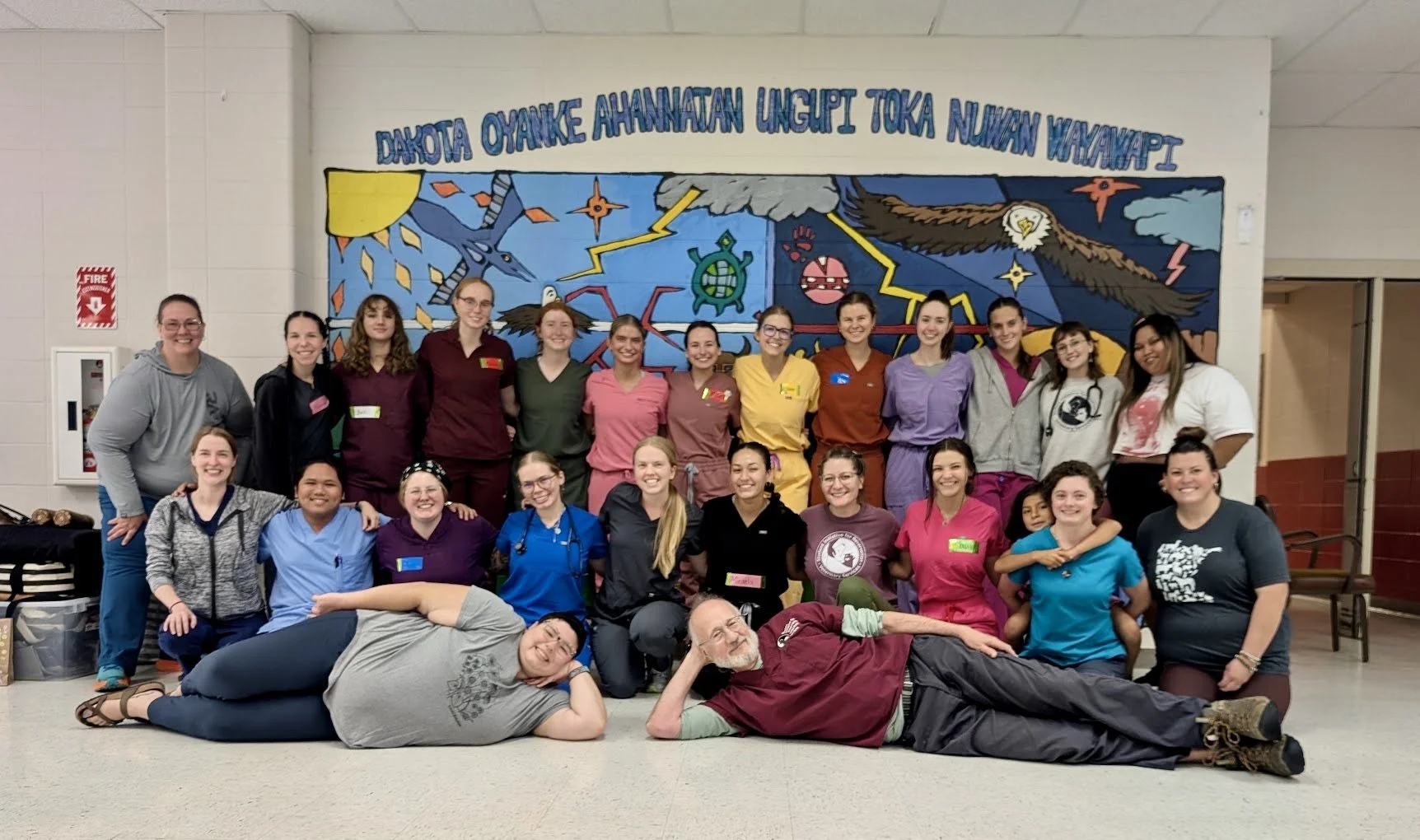
On behalf of the Student Initiative for Reservation and Veterinary Services (SIRVS) from the University of Minnesota College of Veterinary Medicine, we want to say hello, and thank you for so consistently welcoming our students and doctors to your community. With your support we have been honored to work and walk alongside you since 2010, providing wellness and surgery care to your four-legged relatives. We are immensely grateful to you all, and humbled by the grace and support you show to us year after year.
As we prepare for our upcoming clinic (November 14 - 15), we wanted to provide you with some general information on vaccines and spay/neuter surgeries - these are both services we will be providing to your community soon. Please feel free to reach out to us via email anytime! sirvs@umn.edu
VACCINES
How do vaccines work? Vaccines expose your pet's immune system to dead or weakened versions of a disease, so that their body can learn to recognize and fight it off when the real thing comes along. To put it another way, a vaccine is a "practice round" for your pet's body, so that they are prepared to fight (and win!) if they become infected in the future.
Which vaccines should my pet get? Every pet in the US should receive a few "core" vaccines on a regular basis, which protect them against diseases that have no treatment and/or are likely to result in death. There are 3 core vaccines for dogs and 2 for cats, listed below:
• Dog core vaccines (3): Rabies, DAP, and Leptospirosis DAP = Distemper/Adenovirus/Parvovirus combination
• Cat core vaccines (2): Rabies and PVRCP FVRCP = Feline Viral Rhinotracheitis/Calcivirus/Panleukopenia combination
Rabies is an especially important vaccine, because if an infected animal bites a human it is 100% fatal. Vaccinating pets against rabies is required by law, and protects not only your pets, but your families and communities too!
There are more vaccines than just these "core" options, which will be recommended by your veterinarian depending on where you live. Some other examples available in Minnesota include bordetella, influenza, and lyme (for dogs) and feline leukemia (for cats).
Are there risks to vaccination? Just like any medical treatments, vaccines have slight risks and side effects, which are rare but important to look out for. Most pets are just extra sleepy and a little sore the day after their vaccine, which is a normal response because their body is learning to fight a new disease. More serious side effects may include vomiting, facial swelling, and trouble breathing - if you notice these signs, it is important to bring them to a veterinarian right away for treatment.
SPAYING AND NEUTERING
Another important part of pet healthcare includes spay/ neuter surgeries. Spaying and neutering prevents pets from being able to breed and reproduce. For female pets, this includes the removal of their uterus and both ovaries, and for male pets it is the removal of both testicles.
Why do we spay/neuter? If you are not planning to breed your pet, there are many reasons that veterinarians recommend spaying/neutering. The three biggest reasons from the American Veterinary Medical Association (AVMA) are listed below:
• Overpopulation: many animals are euthanized each year because they do not have homes to live in and families to love them. Stray cats and dogs contribute to disease spread, endanger vulnerable people (children, elderly, unhoused, etc.), and do not receive the care they need to live happy, healthy lives. By having your pet spayed or neutered, you play an important role in decreasing stray populations.
• Health benefits: spaying and neutering reduce and even eliminate the risk of developing various cancers and infections. Spaying females prevents pyometra (a serious infection in the uterus/womb) and uterine/ ovarian cancer, while also decreasing the chance of mammary/breast cancer. Neutering males prevents testicular cancer, and decreases the risk of enlarged prostates. Additionally, some studies have shown that spayed and neutered pets live longer on average. By spaying and neutering your pets, you protect them from serious future health concerns, and possibly extend their lifespan!
• Behavioral benefits: certain behaviors such as mate-seeking/roaming and territorial marking can be decreased through spay/neuter surgeries. When your pet is no longer able to breed, they are less likely to go out in search of other animals, and often stop spraying/peeing around the house (male cats especially). For some owners, this makes a big difference in their home life and stress surrounding difficult pet behaviors.
When should I spay/neuter my pet? This question gets asked a lot in the veterinary world! The most recent advice from the American Veterinary Medical Association recommends:
• Spaying/neutering cats (both girls and boys) around 5 months of age.
• Neutering dogs (boys) around 5-6 months of age.
• Spaying dogs (girls) between 5-15 months of age, depending on their breed and size. In general, smaller dogs can be spayed younger, and larger dogs older - so we recommend talking to your local veterinarian when making this decision!
What if I don't want to spay/neuter my pet? As a veterinary community, we recognize and respect that not all owners want to spay/neuter their pets. Our desire is to make sure all pets are healthy and well cared for, and that all owners feel confident in taking care of their beloved four-legged relatives. So, if you don't plan on spaying/neutering your pet, here are a few things we recommend you keep an eye out for:
• Unusual discharge from the "private area" of your female pets. Smelly, green/yellow/bloody liquid can be a sign of a serious infection. You may also notice that they are extra tired, not wanting to eat, vomiting, or have a swollen belly area.
• Lumpy mammary/breast tissue. Just like humans, pets can get mammary cancer - this feels like hard lumps (one or many) under the nipples/along their belly. This type of cancer is much more common in pets that are not spayed, so we recommend feeling your pet's belly area regularly to monitor.
• Difficulty peeing, or "straining" to pee/poop, can be a sign of prostate enlargement in male pets.
• Different-sized testicles can be a sign of testicular cancer, so we recommend keeping an eye on any changes that happen in this area. If one testicle looks larger than the other, is extra warm/red, or seems to be bothering them - a visit to the vet should happen!