THE MANOOMIN CONNECTION: Harvest season connects communities through culture and education
By Vivian LaMoore, Inaajimowin Editor
Manoomin — wild rice — has a spirit of its own. It grows on its own timeline, responding to the water, weather and world around it. And when it is ready, the harvest brings people together, connecting generations to the water, the land, treaty rights and teachings that have been passed down for generations.
Knowing when manoomin is ready comes from that relationship - from watching the water, understanding the rice and carrying forward knowledge shared through generations. Within Mille Lacs Band communities, rice chiefs are among those who carry that responsibility.
The role is rooted in culture and community rather than Band statute. DNR Commissioner Kelly Applegate said there are no Band statutes defining the role of rice chief or establishing a process for selecting one. Instead, the Band respects the cultural process each district uses to select its rice chief and continues to recognize and support the role.
Rice chiefs have a close connection to manoomin and knowledge of the resource, its habitat and how it grows throughout the season. That experience helps guide the determination of when the harvest season officially opens in Mille Lacs Band areas.
District I rice chief Newajii-giizhig, Curt Kalk, is among those who watch the rice and wait for the right time. Kalk goes onto the lakes and checks the rice himself, relying on his own experience and knowledge passed down through generations.
"It's like anything you harvest — tomatoes, potatoes, beans, anything," Kalk said. "The way I learned was going out with the old guys."
The decision to open the season is not made by the rice chief alone. It is made in collaboration with Department of Natural Resources staff and the Commissioner, with time built in to notify the community when harvesting can begin.
For Kalk, determining whether the rice is ready means actually holding it in his hands.
"I pull it off and rub it in my fingers," he said. "The riper it gets, the heavier it is. It doesn't have much inside when it is green." Green rice, he explained, may finish at only a 30 to 40 percent ratio after drying, while ripe rice can finish at 60 to 70 percent per 10 pounds.
"That's why l always tell people to wait until it is ripe," Kalk said. Harvesting green rice is also prohibited.
While manoomin provides an important and nutritious food source, growing it successfully requires the right conditions. Fluctuating water levels, runoff, pollution and wildlife can all affect the health and abundance of a rice bed. Even boat wakes can damage plants by uprooting them. Climate change adds another challenge. A 2023 Great Lakes Indian Fish and Wildlife Commission report identified manoomin as particularly vulnerable to changing conditions, including shifts in water temperature and snowtall.
Those environmental conditions were evident during this year's harvest.
"The manoomin in this area was behind in its development by a few weeks because of the summer drought conditions," said Ga Be Giizhig, Todd Moilanen, Mille Lacs Band Director of Cultural Resources. "Onamia Lake went from green to mature seemingly overnight, and the manidoog reclaimed a majority of the rice for their needs. Ogechie Lake was sparse because of the drought as well."
Still, Moilanen said, the harvest offered another lesson.
"Overall, the manidoog gifted us what we needed - not what we wanted."
That perspective reflects a relationship with manoomin that reaches far beyond the harvest itself. Moilanen said Ojibwe teachings remind us that everything is related - people, plants, four-legged beings, trees, water and the land. Manoom-in is part of that circle of relationships, not simply something growing in the water to be harvested.
*We are all related, and with those relationships comes a responsibility to care for one another," Moilanen said. "Ma-noomin takes care of us, but we also have a responsibility to take care of the manoomin, the water and the land that sustains it. That connection is part of who we are."
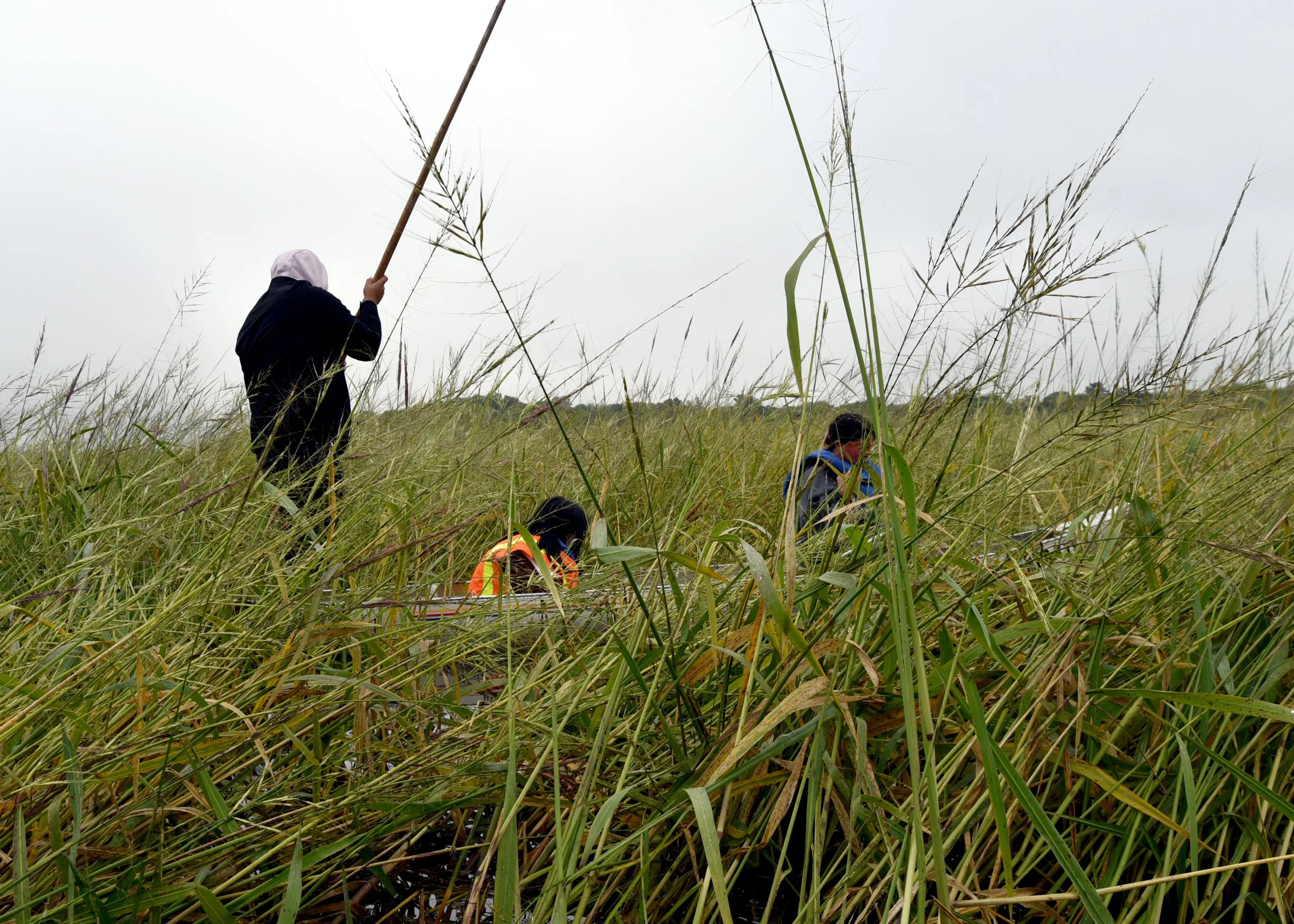
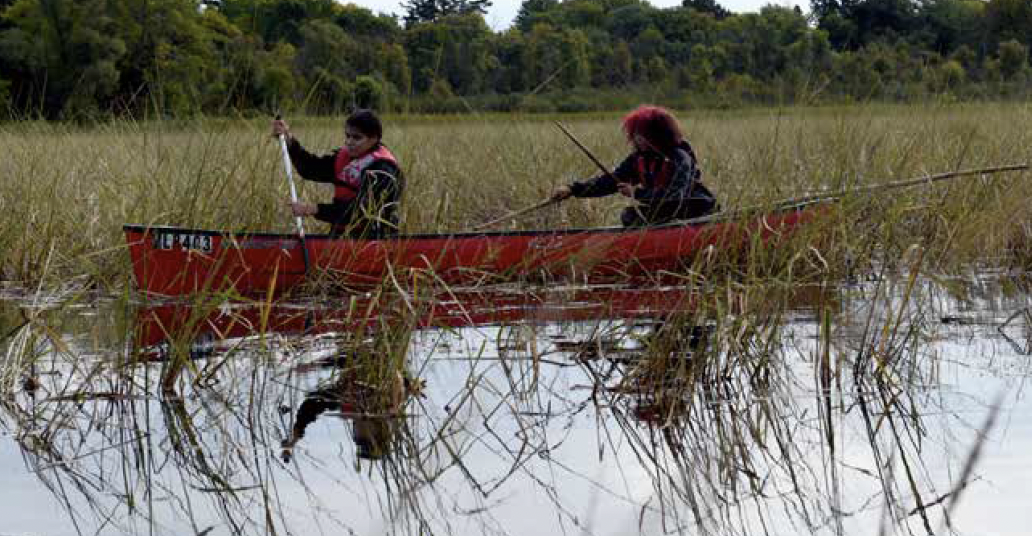
Throughout the often short and hectic harvest season, Moilanen and Cultural Resources staff also work to pass those lessons along. They offer hands-on harvesting education to community members and students, teaching much more than how to gather manoomin.
Lessons include harvesting rules and regulations, treaty rights, etiquette, history and an understanding of why those teachings continue to matter. Because students range from kindergarten through 12th grade, the lessons are adapted for different ages.
During the short 2026 harvest season, the Cultural Resources team brought manoomin education to roughly 400 students from schools and communities throughout the Mille Lacs Band regional service area, including students from the Urban area, Isle and Onamia public schools and Nay Ah Shing Schools.
For one full day, Moilanen and his staff took the manoomin harvesting program to Isle Public Schools, where approximately 150 to 200 students and staff participated, with classes rotating through the program throughout the day.
For Moilanen, those lessons are ultimately about connection.
"I want the children to have the opportunity to connect with our beautiful Aki — the Earth and the land — and to understand that everything has a spirit," he said. "We have a connection to those spirits if we take the time to listen." That understanding reaches beyond manoomin harvesting.
"When we teach children about that connection, we are also teaching them to understand and appreciate our differences," Moilanen said. "It takes everyone in the community working together. That is how we strengthen those connections — to the land, to the water, to one another and to the generations that come after us."
It is the same way those teachings have long been carried forward.
Kalk learned to recognize when manoomin was ready by going onto the lakes with "the old guys," watching what they did and learning from their experience. Today, another generation is being given that opportunity. Through the work of Cultural Resources, children are getting onto the water, putting their hands on manoomin and learning not only how it is harvested, but why it matters.
The tools and teaching methods may change, but the connection remains: one generation sharing its knowledge with the next, and each generation learning to listen to the land, the water and the manoomin.