
the day that changed america
September 5, 2026
By Vivian LaMoore, Inaajimowin Editor
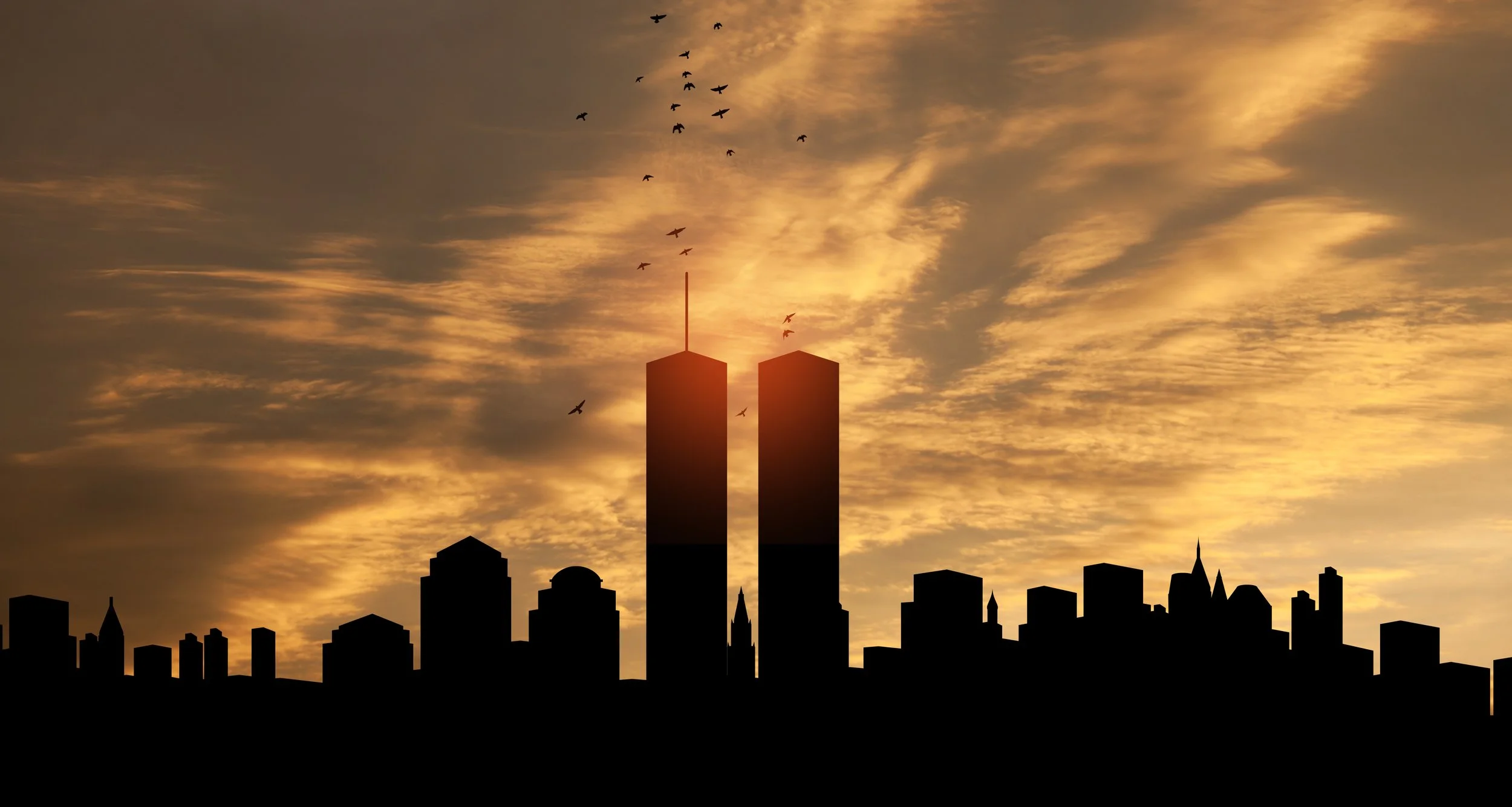
25th Anniversary of 9/11
Twenty-five years later, members of the Mille Lacs Band Community remember vividly the events of September 11, 2001
There are some moments in history that divide time into before and after. September 11, 2001, was one of them.
Twenty-five years have passed since four hijacked airplanes turned an ordinary Tuesday morning into a day Americans would never forget. Nearly 3,000 people lost their lives in the terrorist attacks on the World Trade Center, the Pentagon and aboard United Airlines Flight 93.
But beyond the facts recorded in history books are millions of individual memories—where people were, who they were with, what they saw and heard, and the moment they realized something terrible was happening.
For those old enough to remember that day, one question can still bring those memories rushing back:
Where were you on September 11, 2001?
For today's students, the answer is simple. They weren't here yet.
Twenty-five years later, the memories of those who lived through September 11 are becoming part of the history taught to a generation that knows the day only through photographs, video and the stories of others.
Inaajimowin asked several Band members and Mille Lacs Band employees to share those stories.
“When the second plane hit, you knew”
District I Representative Carolyn Beaulieu began September 11 much like any other morning. At the time, she worked for Mille Lacs Corporate Ventures but had the day off to attend the funeral of Albert Churchill Sr. in Hinckley.
She turned on the morning news as she normally did and saw that something was happening in New York.
“When the first plane hit, you think, ‘Oh, that is a terrible accident,’” Beaulieu recalled. “But then when the second plane hit, you knew. You knew right then.”
Before leaving for the funeral, she still had an ordinary errand to run: dropping off her electric bill payment. When she arrived, everyone was already talking about what was unfolding.
It would be that way everywhere she went.
“It was on every radio station while I was driving,” she said. “There was just this sense of eeriness. It was weird.”
She continued to Hinckley for the funeral as reports came one after another. Surprise became shock. Shock became sadness. And when another hijacked plane struck the Pentagon, Beaulieu remembers feeling anger.
Afterward, she and her family joined millions of Americans glued to their televisions. “That was the focus of our lives for at least two weeks,” she said.
Beaulieu's children were only 6 to 11 years old. She also brought another perspective to what she was watching: She had served nine years in the U.S. Army before being discharged in 1992.
She had been trained about terrorism and knew such attacks happened elsewhere. What she had never imagined was an attack of that magnitude happening in the United States.
“We always think it's not going to happen in our neighborhood — until it does,” she said.
Twenty-five years later, she remains more conscious of her surroundings, particularly while traveling. But she also believes fear cannot be allowed to take over.
“Life goes on,” Beaulieu said. “Terrorists want you to be afraid. They want to have control over you.”
She still thinks about the passengers of Flight 93, who fought back against the hijackers before their plane crashed in Pennsylvania.
Asked what she believes she would have done, Beaulieu didn't hesitate.
“I would have done anything to try to stop it,” she said. “If I knew I was going to die, I would try to stop it. I would not cower in the corner and wait for my death. I would absolutely try to save whoever I could.”
“There was a look of fear on everyone's faces”
While Beaulieu was listening to events unfold from Minnesota, Secretary-Treasurer Sheldon Boyd was in Washington, D.C.
Then serving as the Mille Lacs Band Commissioner of Administration, Boyd was traveling with Jay Kanassatega. They stopped for coffee on their way to a meeting and saw images on a television screen of what appeared to be a plane crash in New York.
Neither yet understood what they were seeing.
They continued to a meeting two levels below street level, where U.S. Sen. Daniel Inouye of Hawaii was speaking to a small group.
Inouye told them an airplane had struck the World Trade Center. Then came another update.
A second plane had hit the other tower.
Upstairs, lines were forming at pay phones. Cell phones were far less common than they are today, and those people did have weren't working. Reports came in that other airplanes were unaccounted for.
“For those next two hours, every person had a look of fear,” Boyd recalled.
Then American Airlines Flight 77 struck the Pentagon.
Talk turned to the possibility that the entire Eastern Seaboard was under attack. With information scarce, imaginations raced ahead of the facts.
Washington began evacuating.
Boyd remembers motorcades carrying government officials through the streets and fighter jets circling overhead. Inouye told the group they were probably safest where they were — two floors below street level. The U.S. Capitol was just up the street. No one knew whether it might be next.
By noon, Boyd walked outside and saw something almost unimaginable in the nation's capital.
“We walked out to an intersection, and in four different directions there was nothing,” he said. “It was like a movie set.”
Later, he learned that the Twin Towers had collapsed.
After dark, Boyd, Kanassatega and Mike Whacker walked along the Potomac River to where they could see the Pentagon. Boyd remembers smoke, spotlights, flashing emergency lights, fire trucks and helicopters moving continuously overhead and along the river.
“It was surreal,” he said.
And there was no easy way home. Air traffic had been shut down. Taxis and rental cars were gone. Boyd remembers hearing that people had even rented U-Haul trucks to escape the city. It took another day before the group secured a rental vehicle and began the trip back to Minnesota. Of everything he witnessed, one image has remained with Boyd.
“The look of fear on everyone's faces,” he said. “Everywhere you went.”
In the weeks that followed, he watched American life change. Security tightened. Armed military personnel appeared at airports before the Transportation Security Administration even existed. Suddenly, Boyd said, everyone gave the flight attendant demonstrating emergency procedures their complete undivided attention.
“We had lost our innocence as a country,” he said.
Boyd also remembers suspicion quickly falling on people perceived to be Middle Eastern — something that, 25 years later, remains part of his reflection on the power of fear.
“Everyone needs a boogeyman,” Boyd said. “It makes them feel safe if they can put a label on fear.”
Yet in Washington that morning, he remembers fear having no race. “You could pick anyone out of a crowd then — any color skin — and that person was scared, too,” he said.
His lesson after 25 years is a simple one.
“Evil comes in all colors,” Boyd said. “No race corners the market on evil. No race corners the market on good.”
For Paul Sam, a Mille Lacs Band member from District IIa, September 11 looked different.
He saw it through the eyes of a firefighter.
Sam was 30 and relatively new to the Minneapolis Fire Department. His shift had ended, and he had climbed into his car when he heard radio DJs talking about an airplane striking the World Trade Center.
He thought it was a joke. Then the announcer said something that caught his attention.
“For all you listeners, this is real. It is not a joke.”
When word came that a second plane had struck the other tower, Sam turned around and went back inside the fire station.
A meeting was underway, and his supervisor initially told him not to turn on the television. As a young firefighter, Sam knew better than to disregard an order.
He did it anyway.
“I said, ‘This is serious. Something is going on,’” he recalled and he defied orders and turned on the TV. Then, “everybody's jaw dropped.”
Almost immediately, the station received an all-call from the fire chief warning firefighters about reports of attacks on major cities. Trucks were to be fueled, filled with water, and ready.
Then they waited.
Sam's station was near Minneapolis-St. Paul International Airport. Normally, airplanes filled the sky. That morning, the sky emptied.
“The skies were void of planes, of any air traffic,” Sam said. “It was eerily quiet.”
As news coverage shifted to firefighters searching through the debris and ash in New York, the tragedy became deeply personal.
“The brotherhood of the fire department is strong,” Sam said. He wanted to go.
“I wanted to volunteer for mutual aid to go to New York,” he said. “I wanted to be there to help.”
He looked around his own station and tried to comprehend what it would mean to lose an entire crew.
“Just imagine if all of us at this station were just gone.”
Firefighters understand that every call carries risk. But Sam said they don't dwell on it. Training takes over. There is a job to do.
September 11 was different. “At any given moment, it could all be over,” he said. “You and your whole crew could just be gone in an instant.”
That loss is what he hopes younger generations understand.
“It's like losing a whole family,” he said.
Today, Sam is a captain at Station 15 in northeast Minneapolis and preparing to retire at the end of the year after a long career.
His son is now a firefighter, too. They have even fought fires together — his son learning the ropes as Sam prepares to step away.
Twenty-five years ago, Sam was the young firefighter who turned around and went back into the station because something was wrong.
Today, he is passing the profession on to the next generation.
A generation shaped by September 11
Adam Candler was part of another generation watching the attacks.
He was a sophomore in high school, sitting in choir class.
“I'm embarrassed to say that, when I first heard that the towers in New York City were struck by airplanes, I didn't even know what the World Trade Center was,” Candler recalled.
With little information, students speculated about what was happening and who might be responsible.
Candler remembers something else more vividly: the people around him.
His math teacher had a “sad and distant look,” as though he was worried about what the future might hold. An older student had already enlisted in the Army. He began telling everyone—perhaps nervously, Candler remembers—that he was going to war.
That afternoon, Candler ran a cross-country race. “To some extent, at least, life went on,” he said.
But for Candler's generation, September 11 did not end when the television coverage stopped.
The United States went to war in Afghanistan and later Iraq. The wars stretched across much of his generation's young adulthood.
“Those wars took place over the course of many years — starting when I was in high school and, in the case of Afghanistan, not ending until I was in my thirties,” Candler said. “So 9/11 significantly influenced my entire generation.”
More than five years after the attacks, Candler joined the U.S. Army. September 11 wasn't the sole reason, he said, but it influenced the decision.
“Having known so many people who served during that time, at some point I decided to join also.”
He continues to serve in the Army Reserve.
Looking back, Candler remembers how much of the atmosphere following September 11 felt like “us versus them.”
He doesn't see the world that way anymore.
But he believes younger generations should study September 11, including the human emotions surrounding the attacks and their aftermath.
“It's always helpful to understand major events that occurred in the past and the driving human emotions for why they occurred,” he said. “After all, things often tend to repeat themselves.”
The teenager sitting in choir class that morning could not have known it, but much of his generation's story was beginning to change.
From current events to history
For Joe Covert, September 11 presents another challenge. He has to teach it.
Covert, now a history teacher at Nay Ah Shing High School, was also teaching in 2001. He was taking his two young children to school when he stopped at his regular coffee shop. The man behind the counter told him a plane had hit the World Trade Center.
Like many people, Covert initially thought it was an accident.
Then the second plane hit.
At school, classes were canceled and students were brought together in a circle. As the social studies teacher, Covert was called upon to help them understand what they were watching.
“At that time, I believed the news media,” Covert said. “I read the newspapers. We were attacked, and this was horrible. It was a Pearl Harbor moment. The whole country was unified.”
He remembers telling students that America would respond.
“I was certain the USA would respond,” he said. “We were not going to just sit. We were going to find who was responsible.”
Twenty-five years later, Covert has had the unusual experience of watching something he once discussed with students as it was happening, become history he now teaches to students who weren't alive to see it.
The years since have also made him more skeptical and more determined to teach students to research what they hear, compare sources and examine evidence.
“As a teacher, I always tell the kids to do their own research,” Covert said. “Don't believe all of the narratives you hear. You have to do your own research.”
Covert emphasizes that he tries not to impose his own conclusions on his students.
“As much as I can, I avoid projecting my own personal bias,” he said. “I give them examples on why it is important to check facts and do research.”
September 11 became personal for Covert in another way. His son later served in Afghanistan.
When Covert looks back now, he thinks not only about the attacks, but about everything that followed — the wars, the lives lost and the experiences carried home by those who served.
“My son witnessed just horrible stuff fighting in Afghanistan,” he said. “We love the troops and feel the loss of all of our troops.”
For the students sitting in Covert's classroom today, September 11 exists in photographs, video, documents and other people's memories. For Beaulieu, it was the morning she drove to a funeral while listening to history unfold on the radio.
For Boyd, it was an empty Washington intersection, fighter jets overhead and fear on every face.
For Sam, it was a silent sky above a Minneapolis fire station and the unbearable thought of losing an entire crew.
For Candler, it was choir class, a worried teacher, an older student predicting war and a cross-country race that still went on that afternoon.
And for Covert, it was standing before a circle of students, trying to explain an event whose consequences no one in that room could yet know.
Twenty-five years later, those memories have become history. And now another generation must learn them.
For Covert, that means more than simply teaching students what happened on September 11, 2001.
It means teaching them to keep asking questions. To examine the evidence. To listen to the people who were there.
And to keep asking why.